



Keffiyehs: Meaning, History and How to Wear Them

The keffiyeh is a traditional cotton scarf recognised across the Middle East, best known for its woven black-and-white checked pattern. This guide explains what a keffiyeh is, the meaning and history behind it, and how to wear one.
What is a keffiyeh?
A keffiyeh (also called a shemagh) is a square cotton scarf, traditionally worn as a headscarf for protection from sun, wind and dust. Today it is also worn around the neck and as a cultural and fashion accessory.
The meaning of the keffiyeh
The keffiyeh is widely recognised as a symbol of Palestinian identity and solidarity, and the black-and-white version in particular is strongly associated with Palestinian heritage. Different regions and colours also carry their own associations — for example, red-and-white patterns are common in parts of the Gulf and Jordan.
A short history
The scarf has long been worn by farmers and workers across the region as practical protection from the elements. Over the twentieth century it also took on cultural and political significance, and today it is worn both as a traditional garment and as a fashion accessory around the world.
The black-and-white pattern
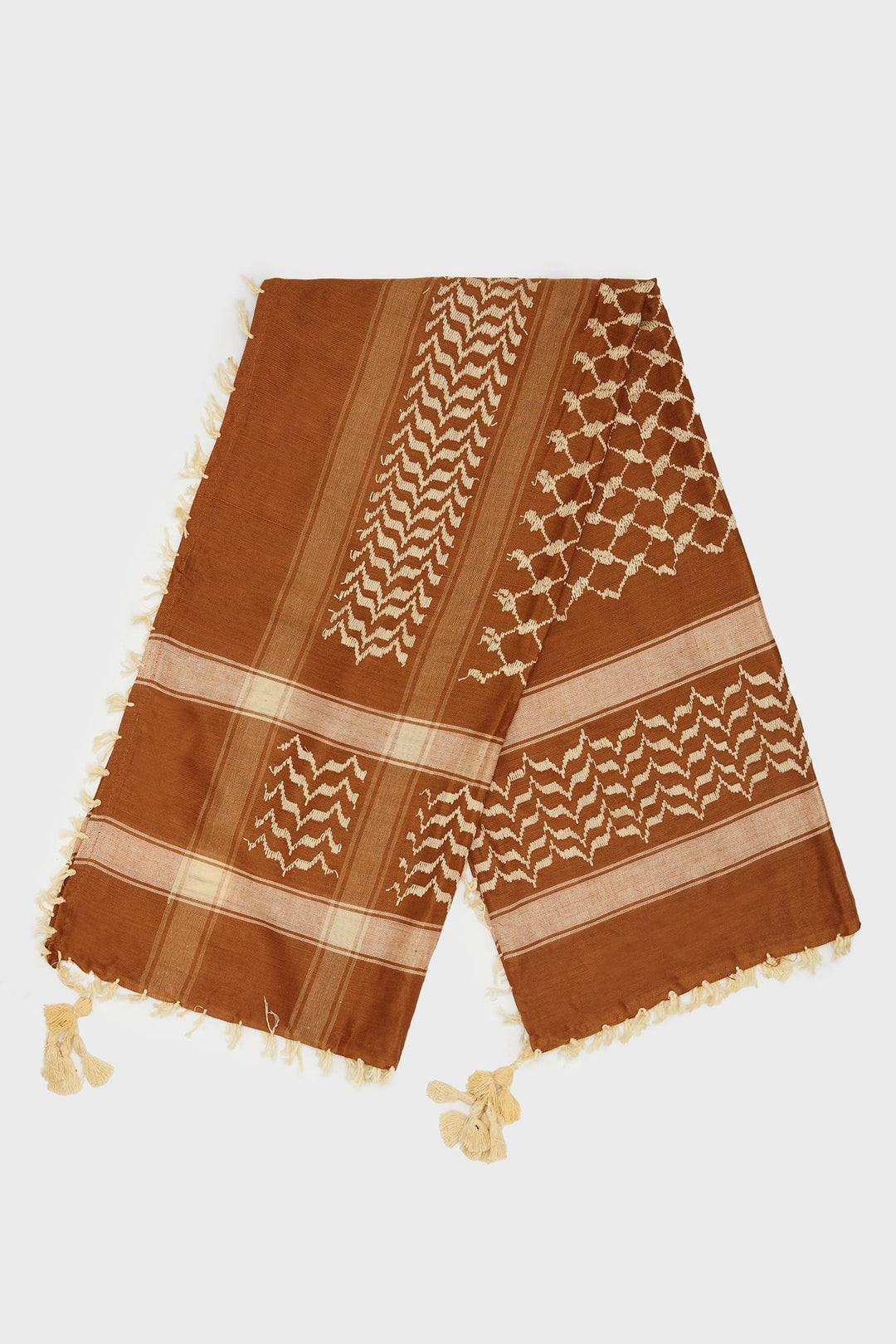
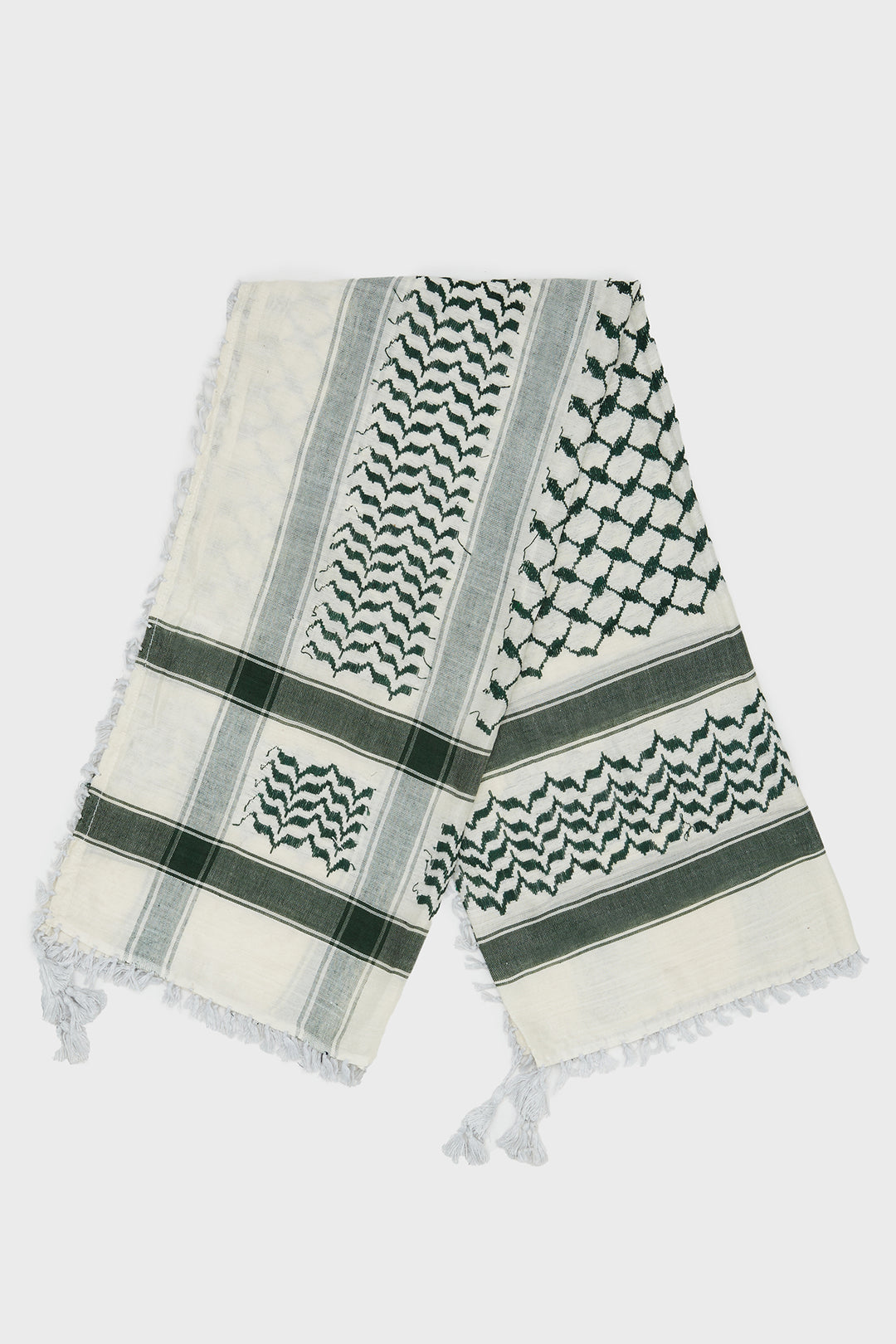
The distinctive woven pattern is the keffiyeh’s most recognisable feature, with fishnet and leaf-style motifs that are part of its traditional weave.
How to wear a keffiyeh
- Draped around the neck as a scarf — the simplest everyday option.
- As a headscarf, folded into a triangle and secured.
- Over the shoulders for extra warmth.
Keffiyehs at CAVE
Browse the keffiyeh and shemagh collection, including the black-and-white keffiyeh scarf.
Frequently asked questions
What is a keffiyeh? A traditional cotton scarf with a woven checked pattern, worn on the head or around the neck.
What does the black-and-white keffiyeh represent? It is widely associated with Palestinian identity and solidarity.
What is the difference between a keffiyeh and a shemagh? They refer to the same style of scarf; “shemagh” is common in the Gulf, while “keffiyeh” is used more widely.





Leave a comment